
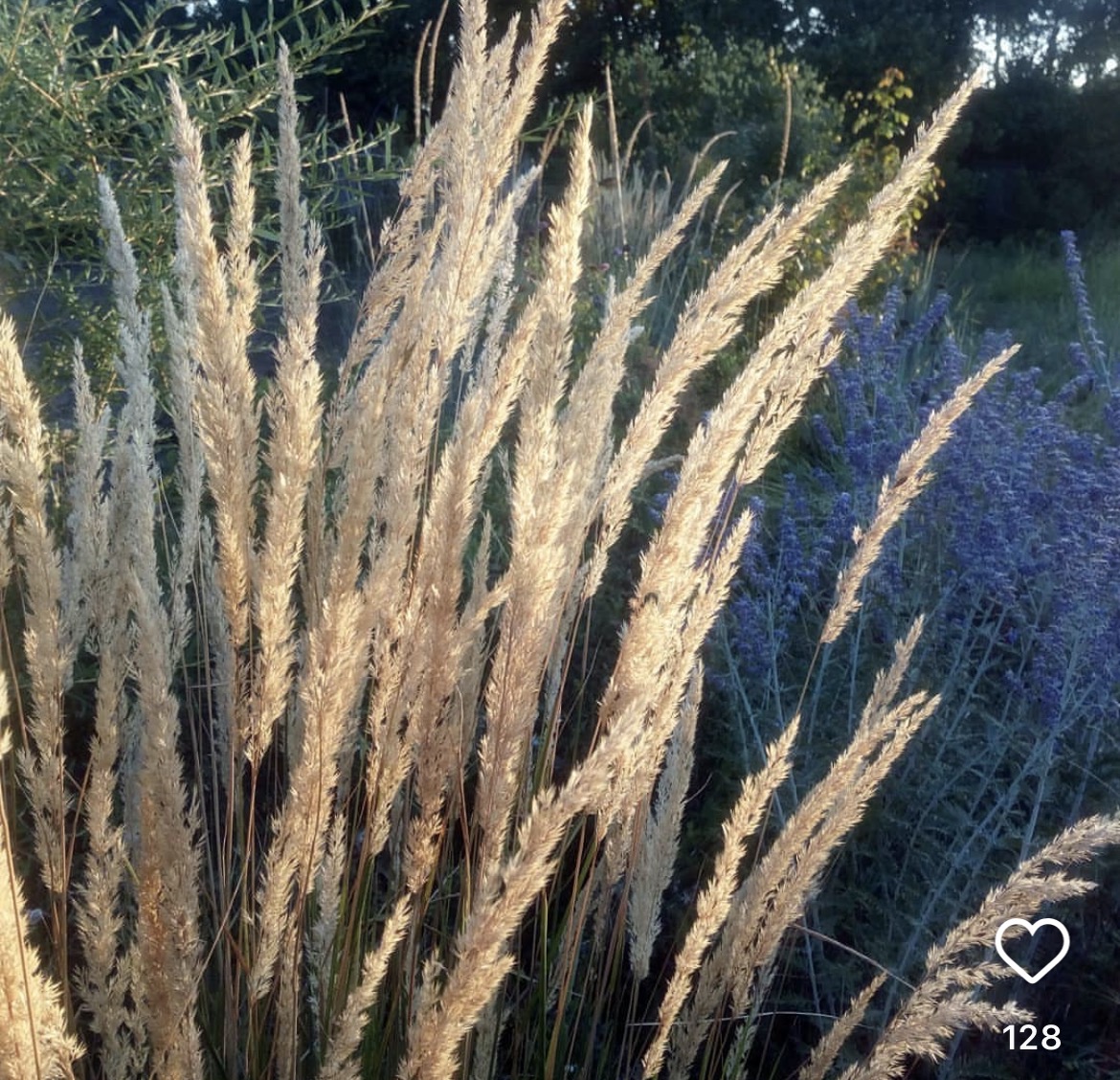
Calamagrostis × acutiflora ‘Karl Foerster’
£6.95
Calamagrostis × acutiflora ‘Karl Foerster’
An elegant upright ornamental grass that adds structure and movement to the garden.
Calamagrostis ‘Karl Foerster’ forms neat, vertical clumps of green foliage topped with slender flower spikes that emerge soft purple-bronze before fading to warm wheat tones. The airy plumes catch the light beautifully and provide long-lasting interest from early summer right through autumn, often remaining attractive into winter. The flowers and seed heads gently sway in the breeze, bringing movement and texture while also providing habitat for insects.
This hardy, reliable grass thrives in full sun or light shade and copes well with a wide range of soils as long as they are reasonably well drained. It grows in a tight upright clump, making it perfect for adding height without spreading aggressively. Ideal for modern borders, prairie-style planting or mixed perennial beds.
Specifications
Type: Hardy ornamental grass
Flower colour: Purple-bronze maturing to golden wheat
Flowering period: June – September
Height: approx. 120–150 cm
Spread: approx. 50–60 cm
Position: Full sun or light shade
Soil: Moist but well-drained soil
Hardiness: Fully hardy in the UK
Wildlife value: Provides shelter for insects
🌿 Note for Isle of Wight planting
This grass performs well in the Isle of Wight’s coastal climate and tolerates windy positions better than many taller grasses thanks to its strong upright habit. It’s excellent for adding structure to sunny island borders and naturalistic planting schemes.
🌿 Ideal Companion Plants from The Green Standard Range
Achillea ‘Lilac Beauty’ – soft lilac flower plates contrast beautifully with the vertical grass stems
Geum ‘Fireball’ – fiery orange blooms provide a bright early season highlight beneath the grass
Nepeta ‘Blue Wonder’ – relaxed mounds of lavender-blue flowers soften the base of the upright grass
Jasione ‘Blue Light’ – compact blue globe flowers add pollinator interest in front of the taller stems
🌟 The Green Standard Tip
Leave the seed heads standing through winter for structure and wildlife value. Cut the plant back to the base in late winter or early spring just before fresh new growth appears.