
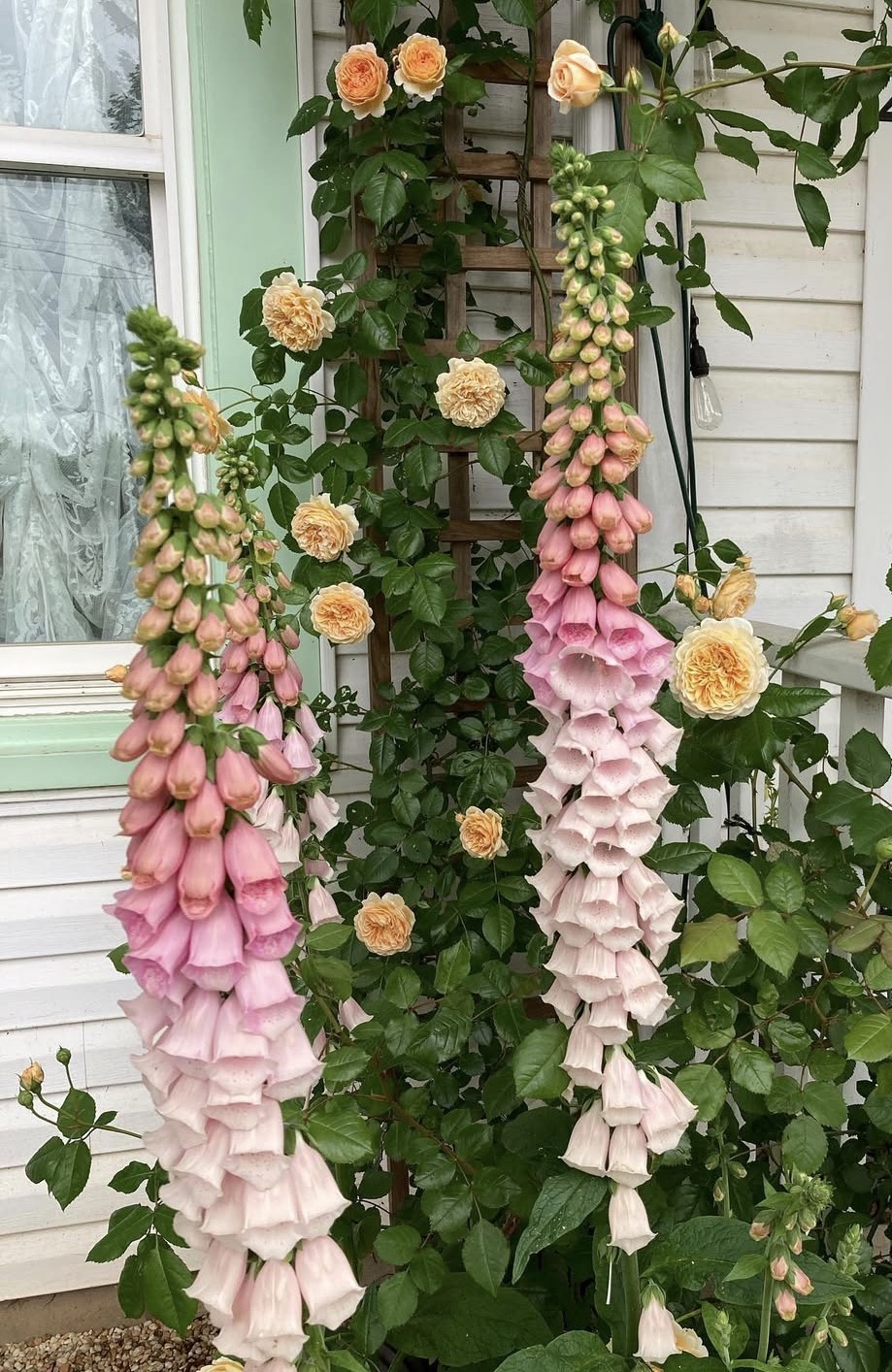
Digitalis ‘Pink Gin’
£4.00
Out of stock
Digitalis ‘Pink Gin’
Tall spires of dusky pink bells, a refined foxglove for naturalistic planting
Elegant towers of soft rosy-pink flowers rise above a clump of deep green foliage from late spring into early summer. Each tubular bloom is delicately speckled inside, creating that classic foxglove look that bees absolutely adore. The vertical flowers bring height and movement to borders while acting as a magnet for pollinators throughout the flowering period.
Digitalis ‘Pink Gin’ thrives in sun or light shade and prefers moist but well-drained soil. It forms a neat rosette of leaves in its first year before sending up tall flowering stems, often reaching around a metre in height. This variety is typically short-lived perennial or biennial but will happily self-seed in the garden, creating relaxed, natural drifts over time.
Specifications
Height: 80–100 cm
Spread: 40–50 cm
Position: Sun or partial shade
Soil: Moist but well-drained
Flowering period: May – July
Hardiness: Hardy perennial / short-lived
Wildlife: Excellent for bees and pollinators
Habit: Upright clump forming
Note for Isle of Wight planting
Foxgloves perform beautifully in Isle of Wight gardens where slightly dappled shade and moisture in the soil allow them to thrive. They are particularly useful in sheltered coastal gardens and woodland-style borders, where their height adds structure amongst softer perennials.
Ideal Companion Plants from The Green Standard Range
Salvia ‘Royal Velours’, deep burgundy spikes that contrast beautifully with soft pink foxglove bells
Nepeta ‘Blue Wonder’, low mounds of lavender-blue flowers that soften the base of taller foxgloves
Calamagrostis ‘Karl Foerster’, upright grass that echoes the foxglove’s vertical lines
Achillea ‘Lilac Beauty’, airy lilac umbels that weave naturally through cottage-style planting
🌟 The Green Standard Tip
Allow a few flower spikes to set seed rather than cutting them all back. Foxgloves will often self-seed around the garden, giving you new plants popping up naturally in future seasons.