
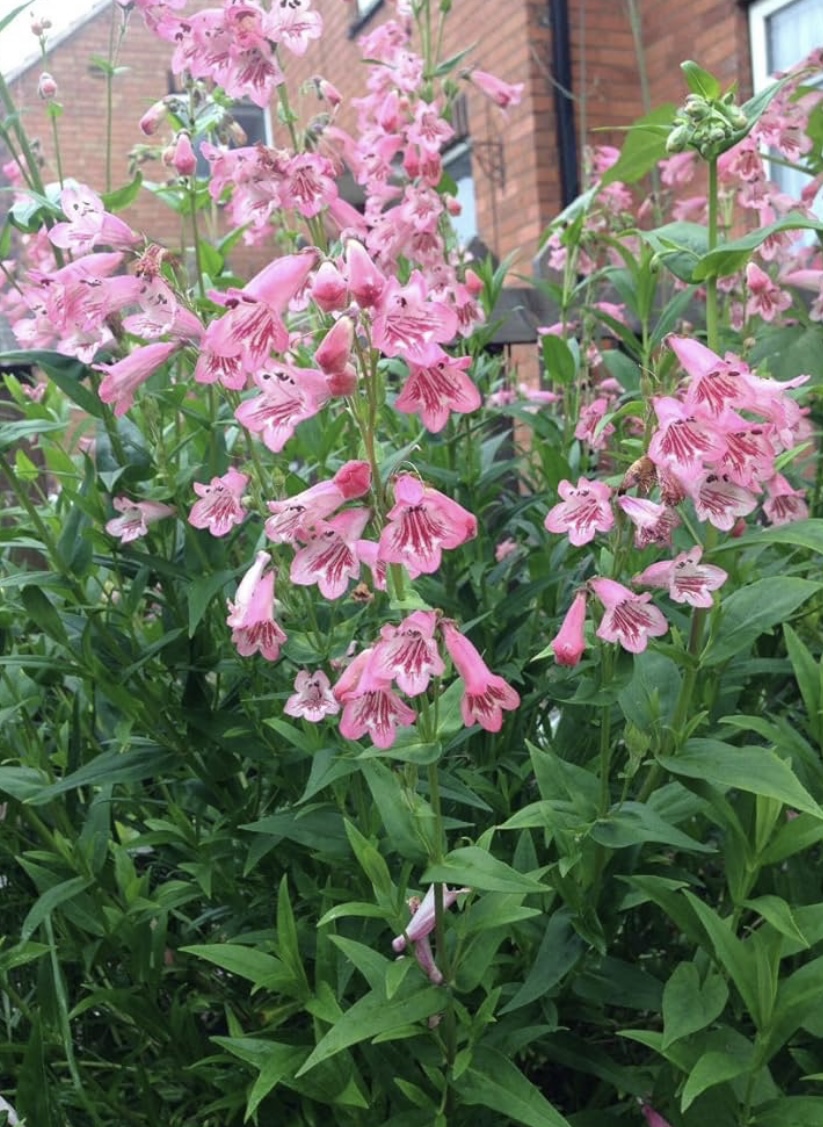
Penstemon ’Hidcote Pink’
£8.00
Penstemon ‘Hidcote Pink’
A long-flowering perennial with elegant soft pink trumpets that bring colour and pollinators to the garden for months.
Slender stems carry clusters of delicate, tubular soft pink flowers from early summer well into autumn. The blooms are a magnet for bees, and their graceful shape adds a relaxed cottage garden feel to borders. The slightly glossy green foliage forms a neat mound, allowing the flowers to stand out while blending easily with other summer perennials.
Penstemon ‘Hidcote Pink’ thrives in full sun and well-drained soil, forming a bushy clump that flowers reliably for months. It is particularly useful for adding long-lasting colour to mixed borders, gravel gardens and pollinator-friendly planting schemes. In milder areas it behaves almost like a small sub-shrub, returning strongly each year if protected from winter wet.
Specifications
Plant type: Hardy perennial
Flower colour: Soft pink
Flowering period: June to October
Height: approx. 60–80 cm
Spread: approx. 40–50 cm
Position: Full sun
Soil: Free-draining soil
Hardiness: Hardy in most UK gardens with good drainage
Pollinator friendly: Yes, loved by bees
Note for Isle of Wight planting
Penstemons tend to do particularly well in the Isle of Wight’s mild coastal climate. Plant in a sunny, sheltered border with free-draining soil and avoid heavy winter wet to keep plants thriving for many seasons.
Ideal Companion Plants from The Green Standard Range
Salvia ‘Nachtvlinder’, deep violet spikes that create beautiful colour contrast with the soft pink flowers
Nepeta ‘Blue Wonder’, low mounds of blue flowers that soften the base of the planting
Erigeron ‘Lavender Lady’, airy daisies that weave naturally through penstemon stems
Calamagrostis ‘Karl Foerster’, upright grass that adds height and movement behind the planting
🌟 The Green Standard Tip
Leave the stems on the plant over winter rather than cutting back in autumn. This helps protect the crown from cold and wet, then cut back in spring when new growth appears.