
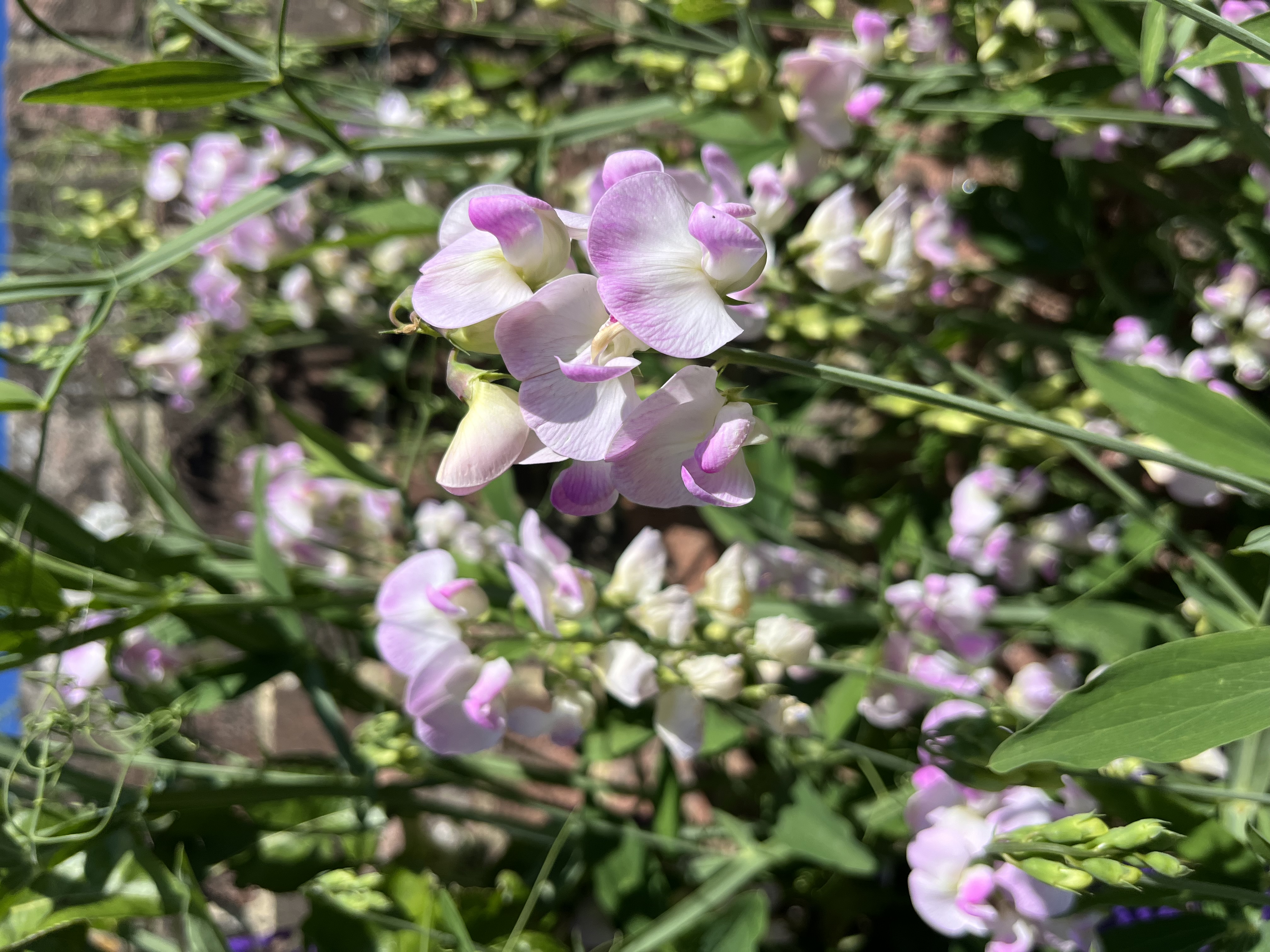
Perennial Lathyrus latifolius ‘Pink Pearl’ (Everlasting Sweet Pea)
£7.95
Lathyrus latifolius ‘Pink Pearl’ (Everlasting Sweet Pea)
Graceful perennial climber with clouds of soft pink summer flowers.
Soft, shell-pink blooms appear in loose clusters through summer, floating above fresh green foliage. Unlike annual sweet peas, this perennial variety does not have fragrance, but it more than makes up for it with reliability and long flowering. The open flowers are very attractive to bees and other pollinators, creating a light, cottage-garden feel as they scramble through supports.
A vigorous and hardy climber that returns year after year, Lathyrus latifolius ‘Pink Pearl’ thrives in full sun and well-drained soil. It happily climbs through trellises, fences, or neighbouring plants, quickly creating height and movement in borders. Once established it is drought tolerant and very low maintenance, perfect for naturalistic or informal planting schemes.
Specifications
Plant type: Herbaceous perennial climber
Flower colour: Soft shell pink
Flowering period: June to September
Height: 1.8 to 2.5 m
Spread: 60 to 90 cm
Position: Full sun
Soil: Well-drained soil, tolerant of poorer soils
Hardiness: Fully hardy in the UK
Pollinator friendly: Yes
Fragrance: No
Note for Isle of Wight planting
This tough perennial climber copes well with coastal conditions and dry summer soils often found in Isle of Wight gardens. Plant it where it can scramble through shrubs, roses, or a fence line, it will quickly soften boundaries and bring a relaxed cottage-garden feel.
Ideal Companion Plants from The Green Standard Range
Salvia ‘Royal Velours’ , deep burgundy-purple flowers that contrast beautifully with the soft pink climber
Nepeta ‘Blue Wonder’ , low mounds of lavender-blue flowers loved by bees
Stipa tenuissima , airy ornamental grass that adds movement beneath the climbing stems
Origanum ‘Bristol Cross’ , edible oregano with pretty pink flowers and pollinator appeal
🌟 The Green Standard Tip
Provide a simple support early on, such as a trellis or obelisk, and gently guide young stems. Once established, this perennial sweet pea will happily weave its way through neighbouring plants to create a natural, romantic display year after year.